Ruinenlust
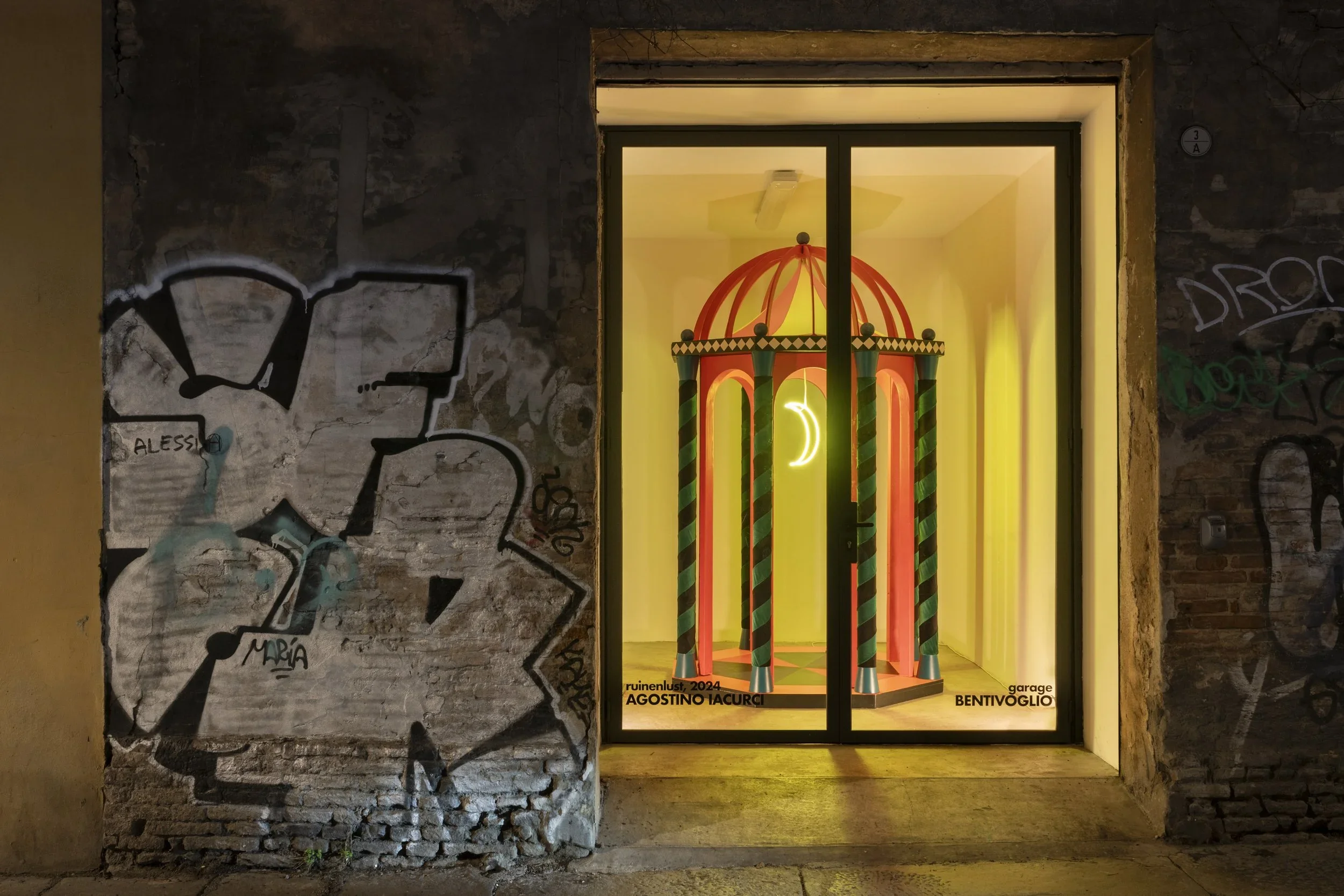
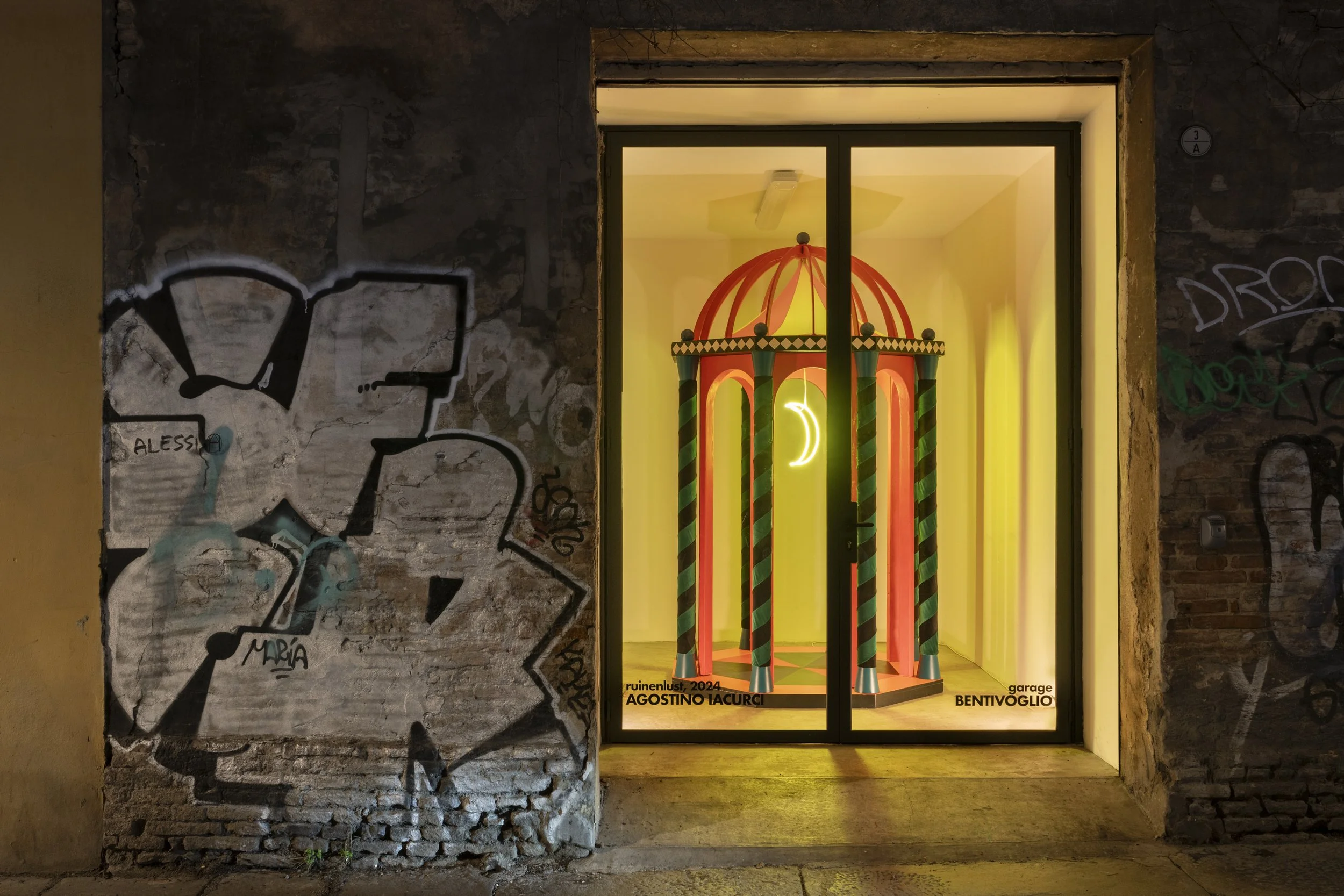
garage BENTIVOGLIO, Bologna, 2024
Photo: Carlo Favero
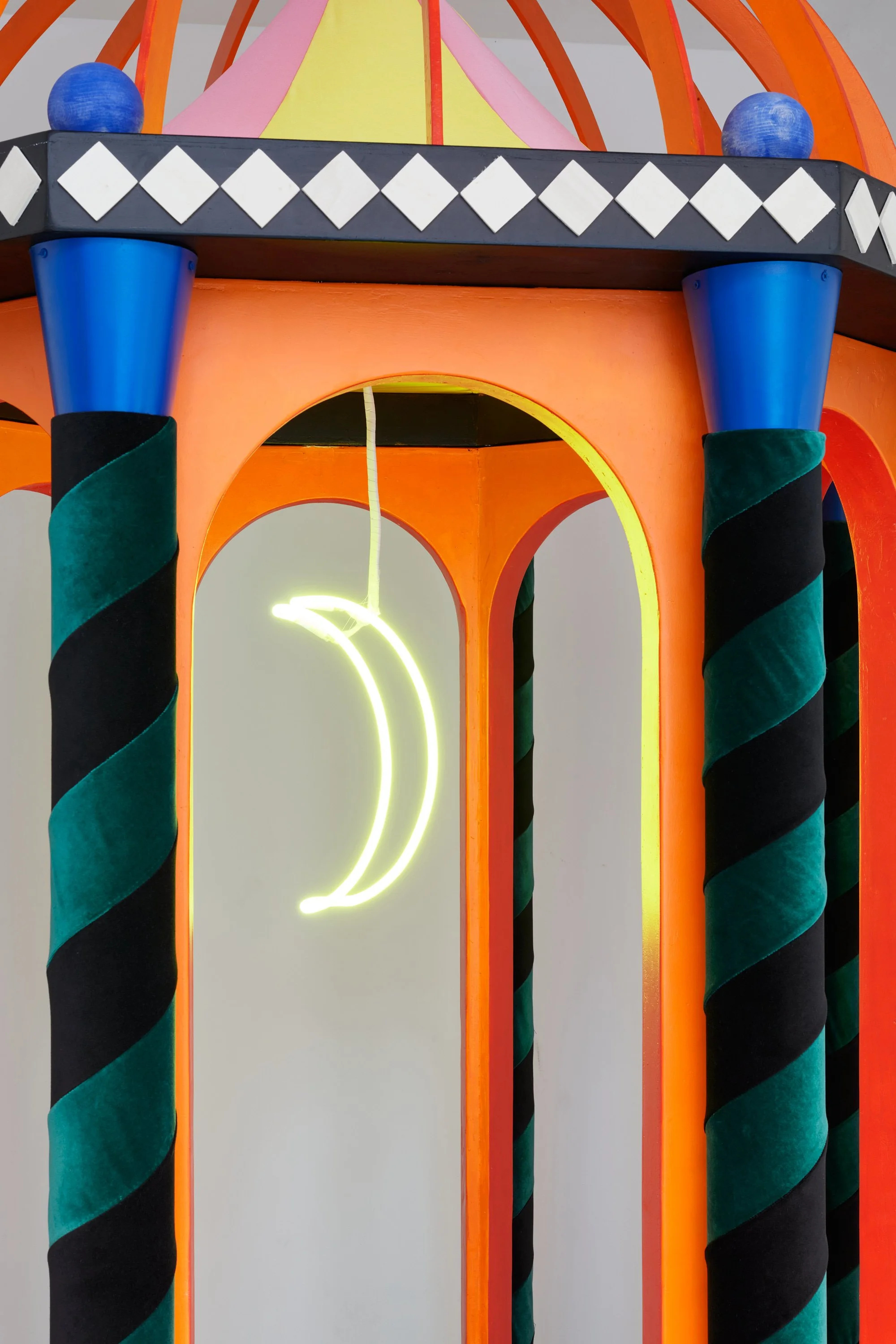
The installation investigates the formal and conceptual relationship between the work of Felice Giani and Agostino Iacurci, identifying a shared foundation in the language of architectura picta. In both artists' practices, classical archetypes are filtered and transformed through distinct, contemporary obsessions. This small temple—crafted from painted wood, felt, iron, and neon—eschews the traditional lyricism of Alberti or the idealized purity of Winckelmann, instead bridging the lost polychromy of the Parthenon with the rigorous aesthetics of Minimalist art. Color blocking, a signature element of Iacurci’s grammar, transforms the wooden surfaces and enhances the tactile quality of the fabrics, creating a vibrant, chromatic dialogue centered around a moon-shaped neon tube that illuminates the space after dusk.
Despite its scenographic presence, the temple remains an empty stage, never to be inhabited by actors; it leaves the street and the passers-by as the sole protagonists of the scene. The title, Ruinenlust, draws from the German concept of "ruin-lust"—an irresistible attraction toward dilapidated structures and abandoned places. It is a sense of nostalgic pleasure, typical of German Pre-Romanticism, here extended into an existential reflection on the melancholy and gratification found in the contemplation of failure—a "joy of the shipwrecked," as described by Ungaretti. The work thus functions as a temporal device: a polychrome mirage and a ruin from the future, embedded within the ancient walls of one of Bologna’s most grand palaces.