Imaginary Cartography
College Robert Doisneau, Paris, 2026
Photo: Claire Dorn
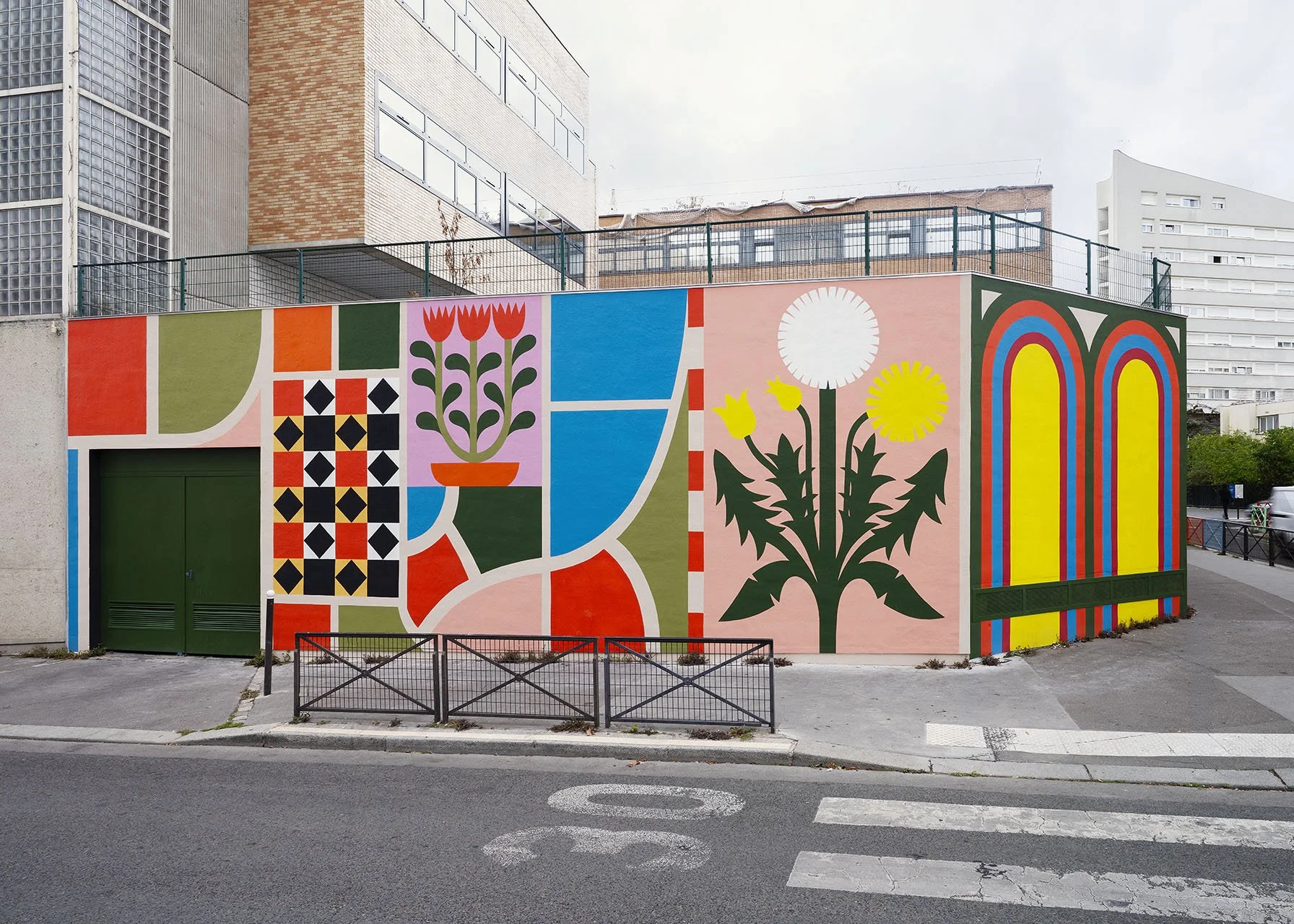
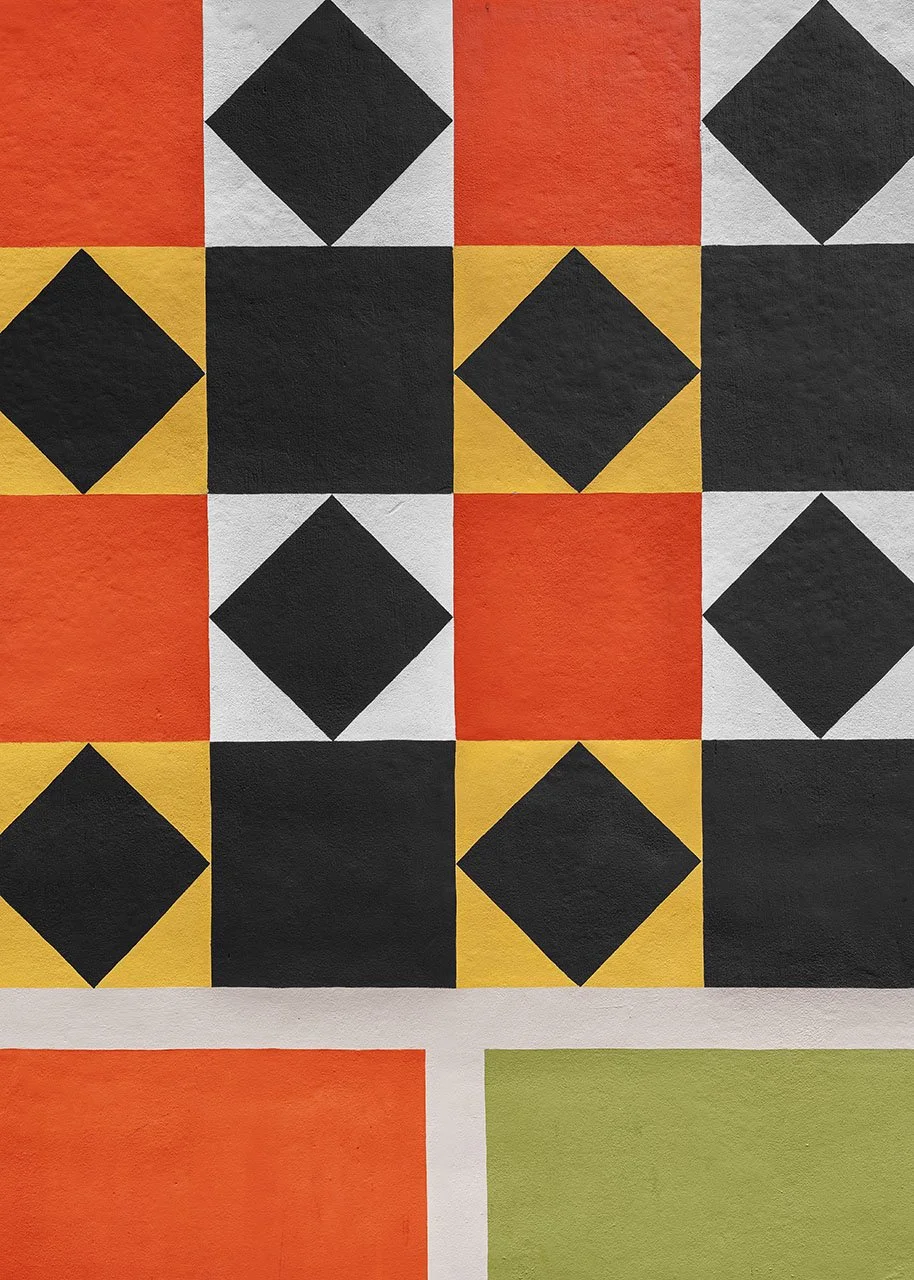
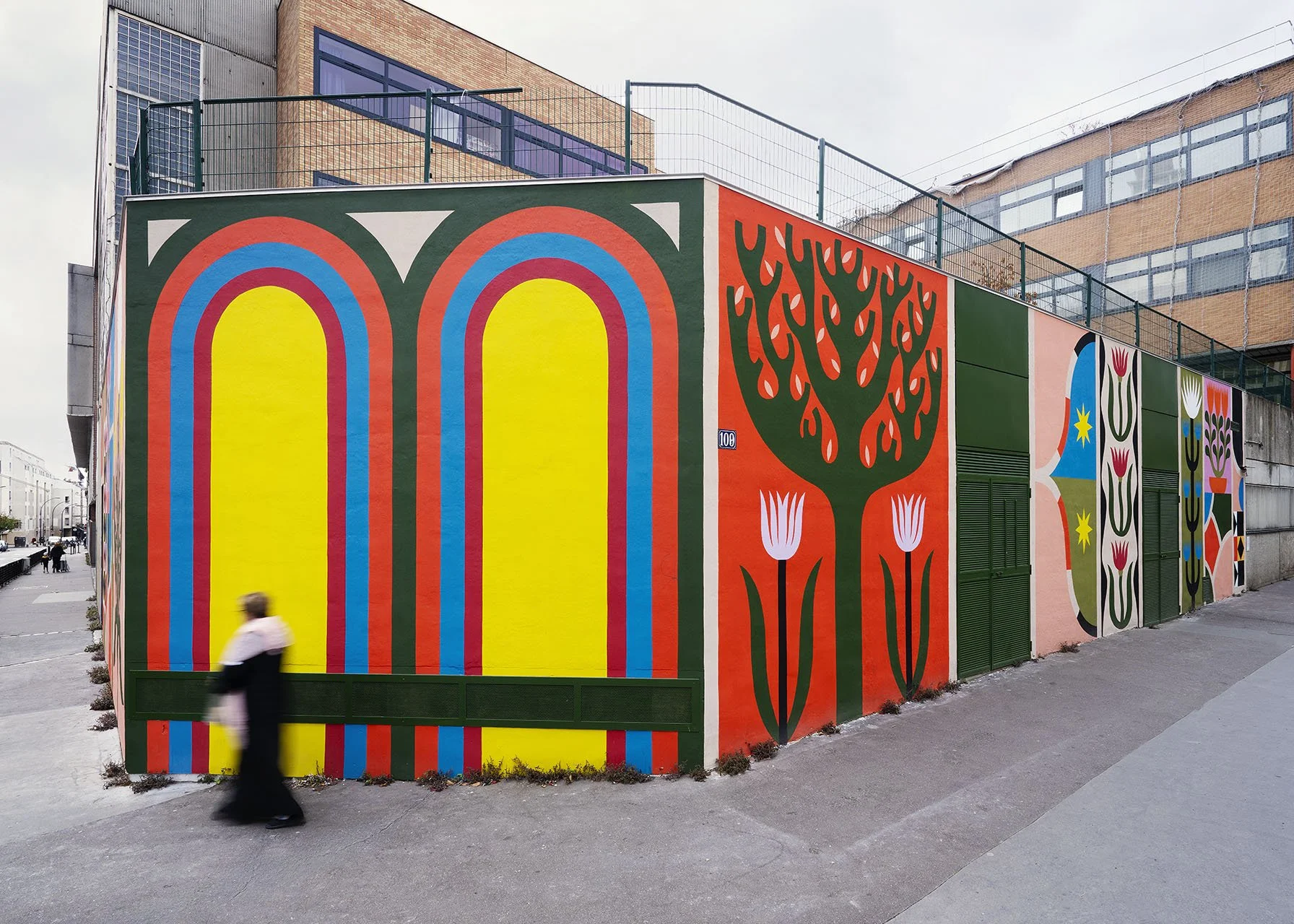
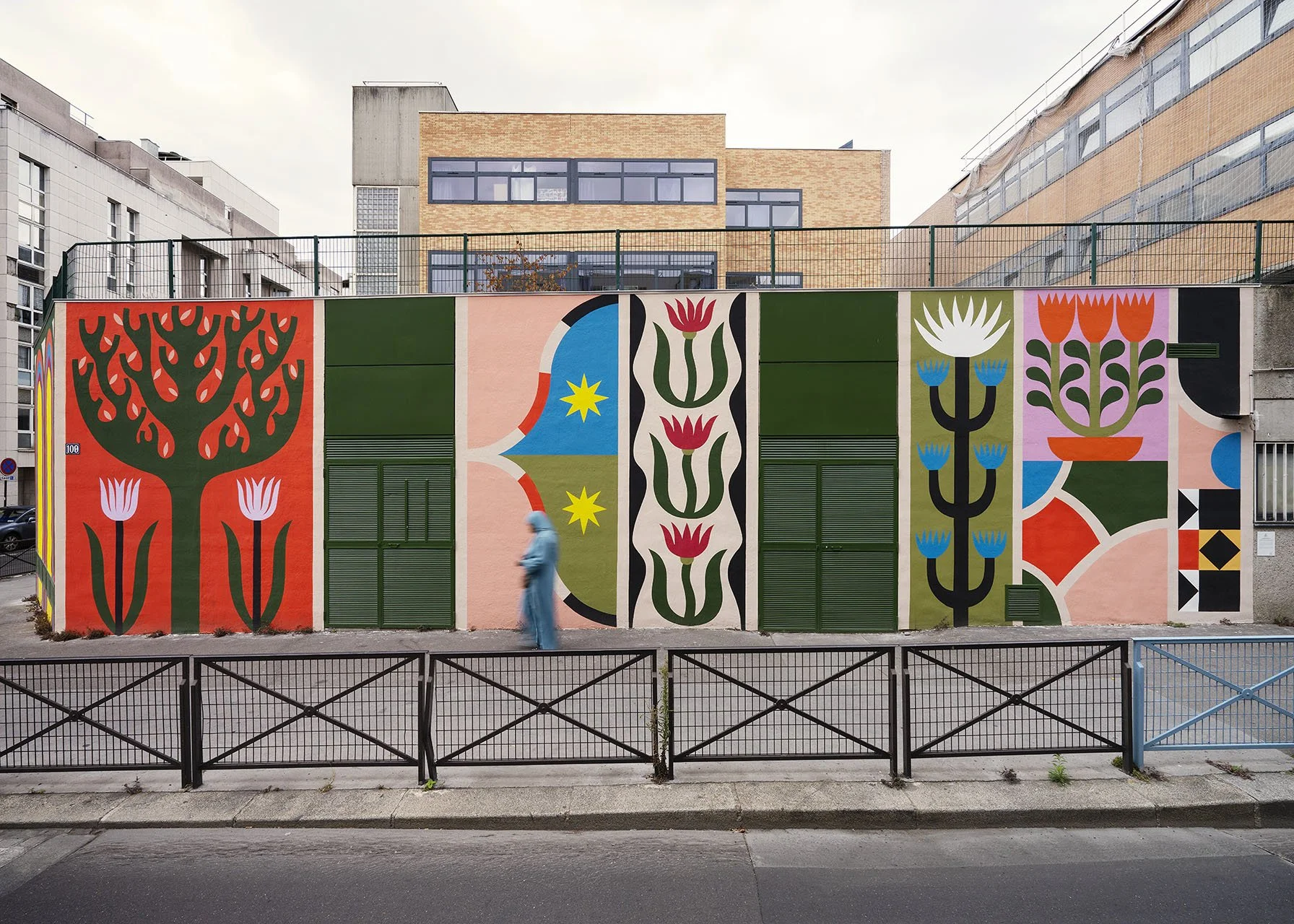
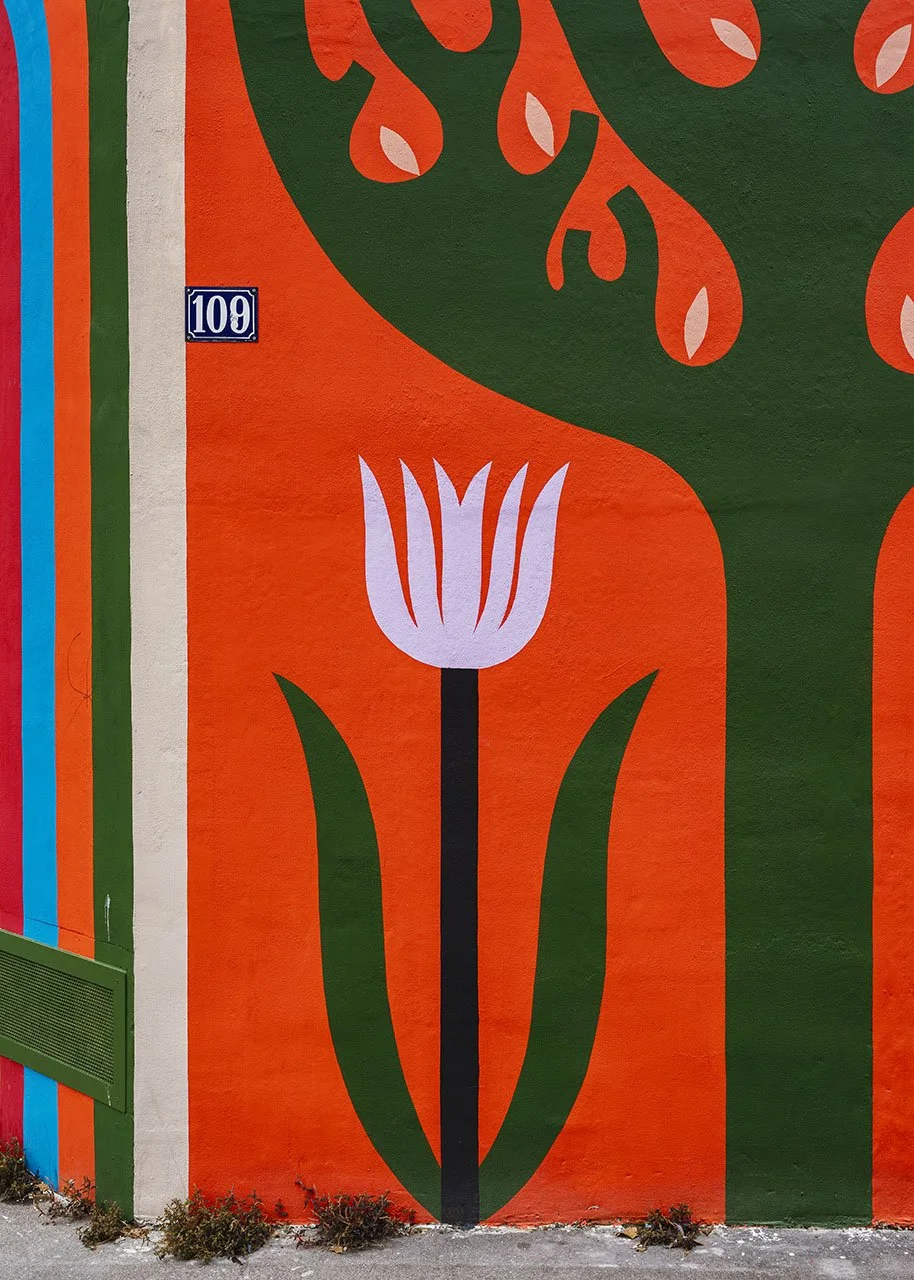
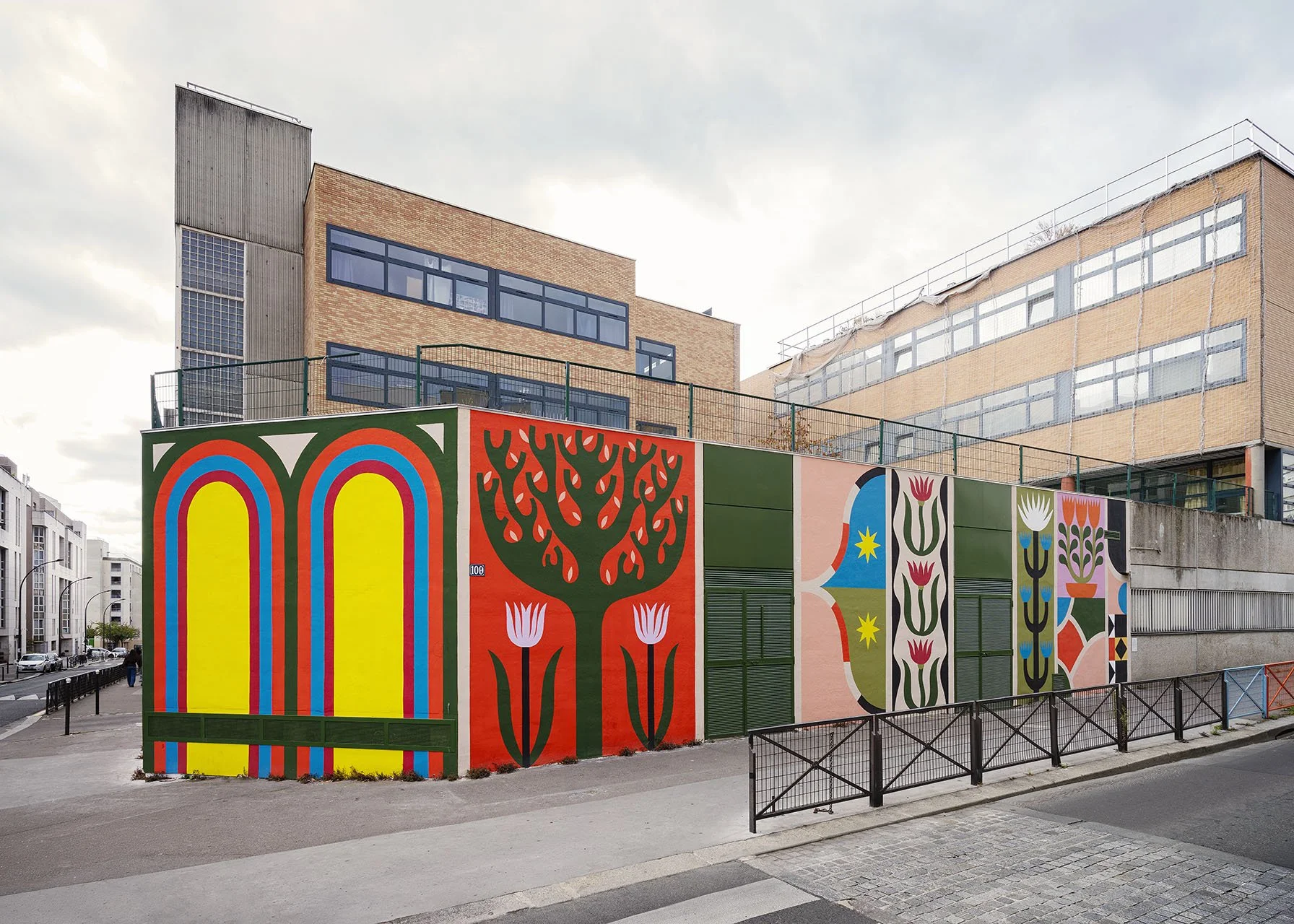
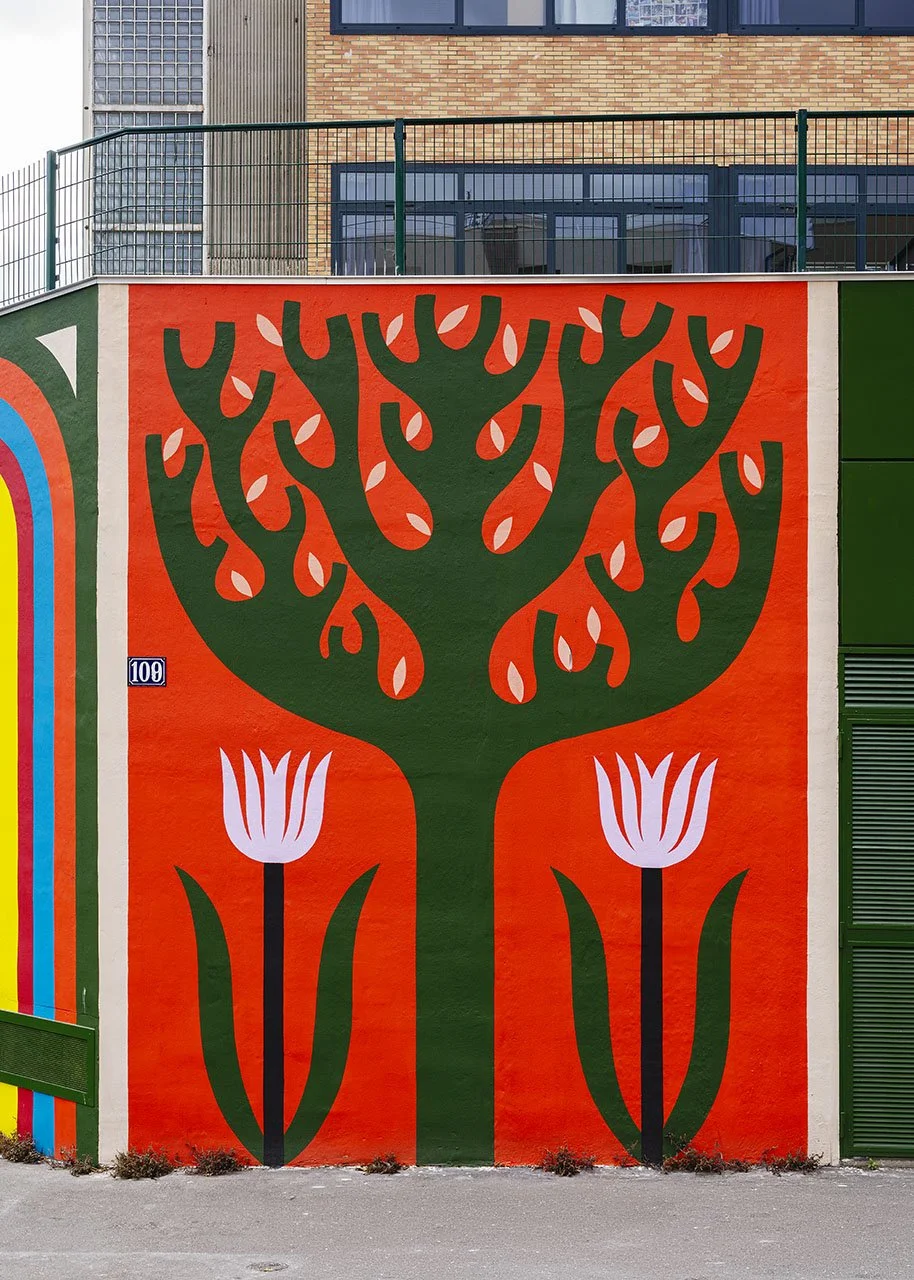
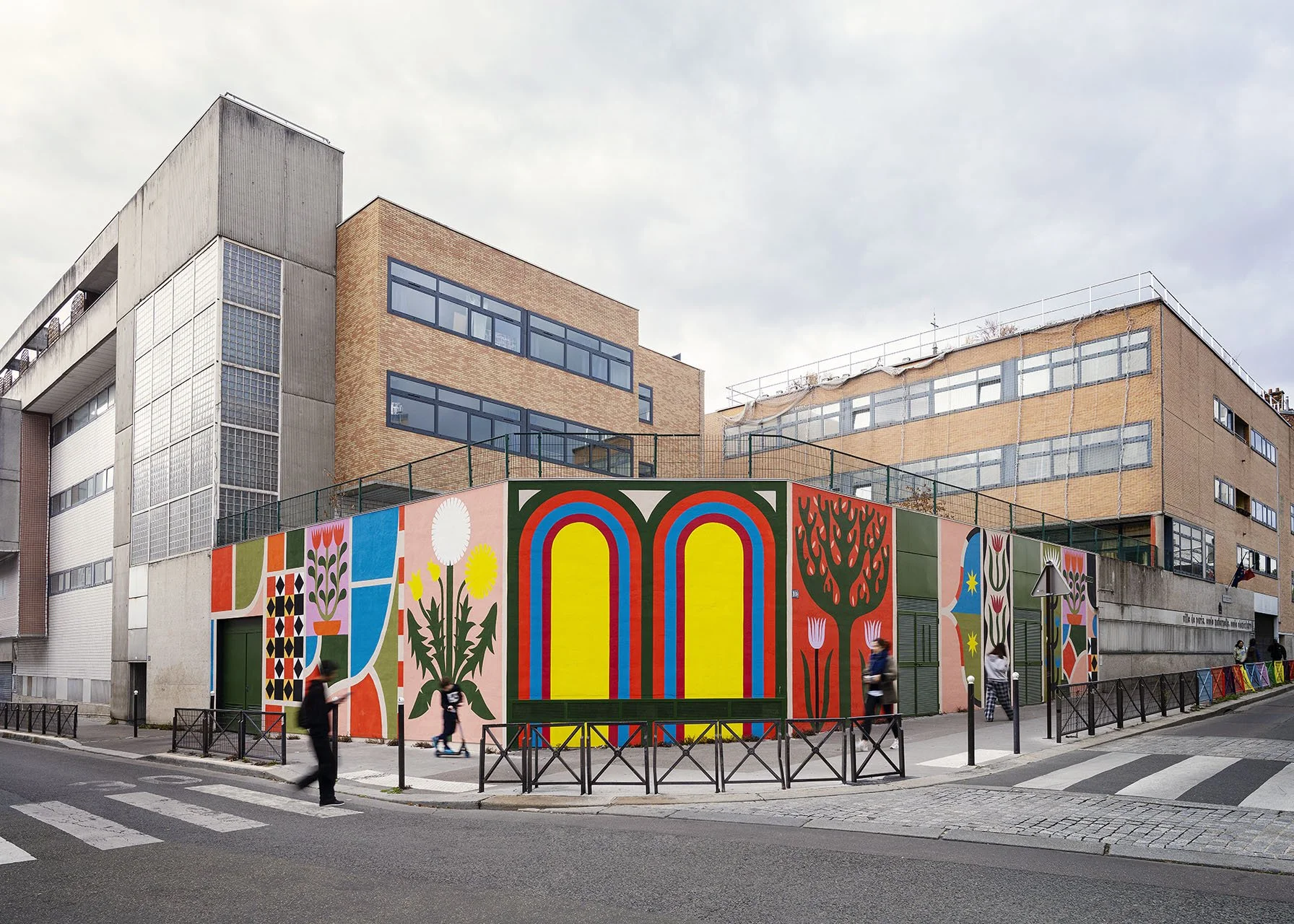
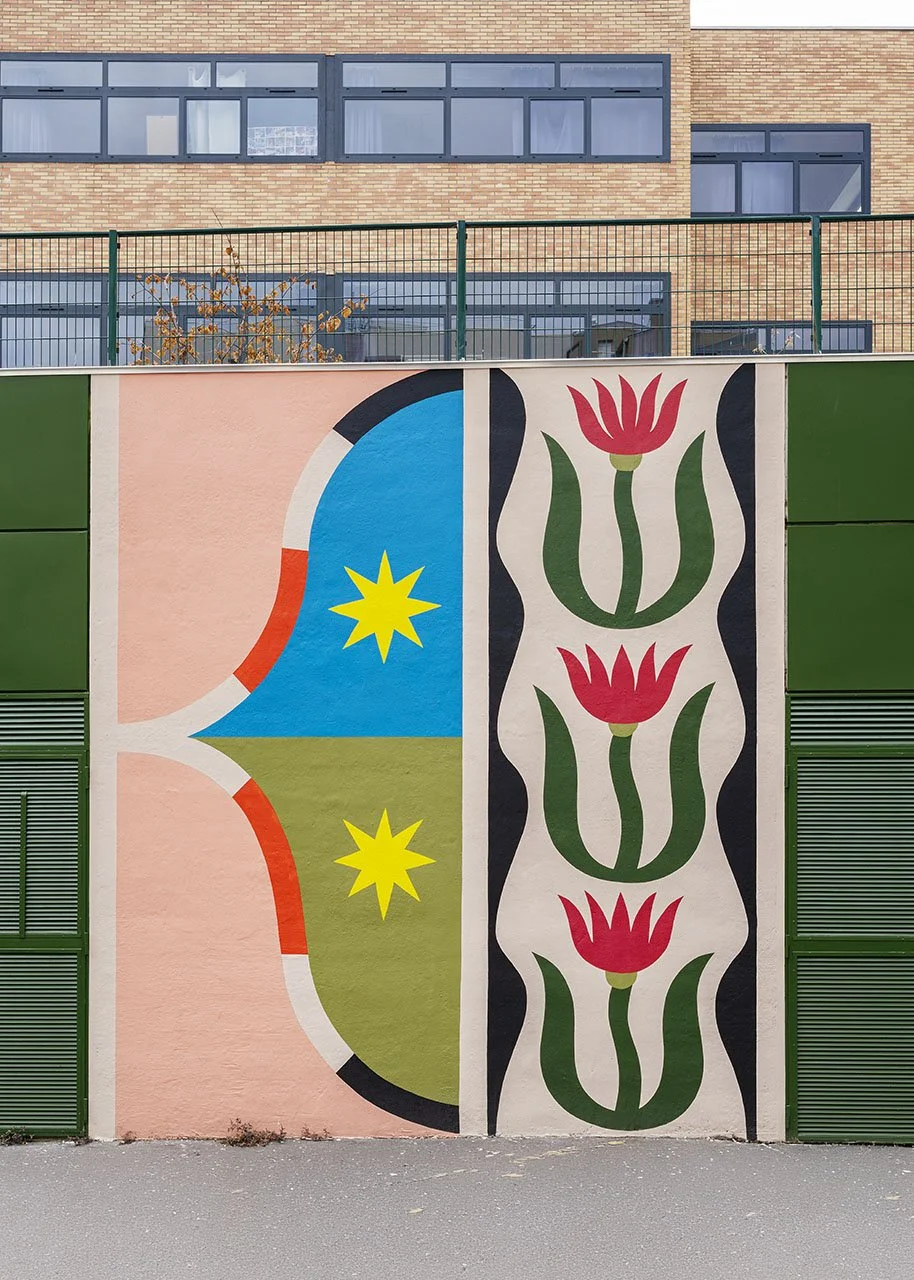
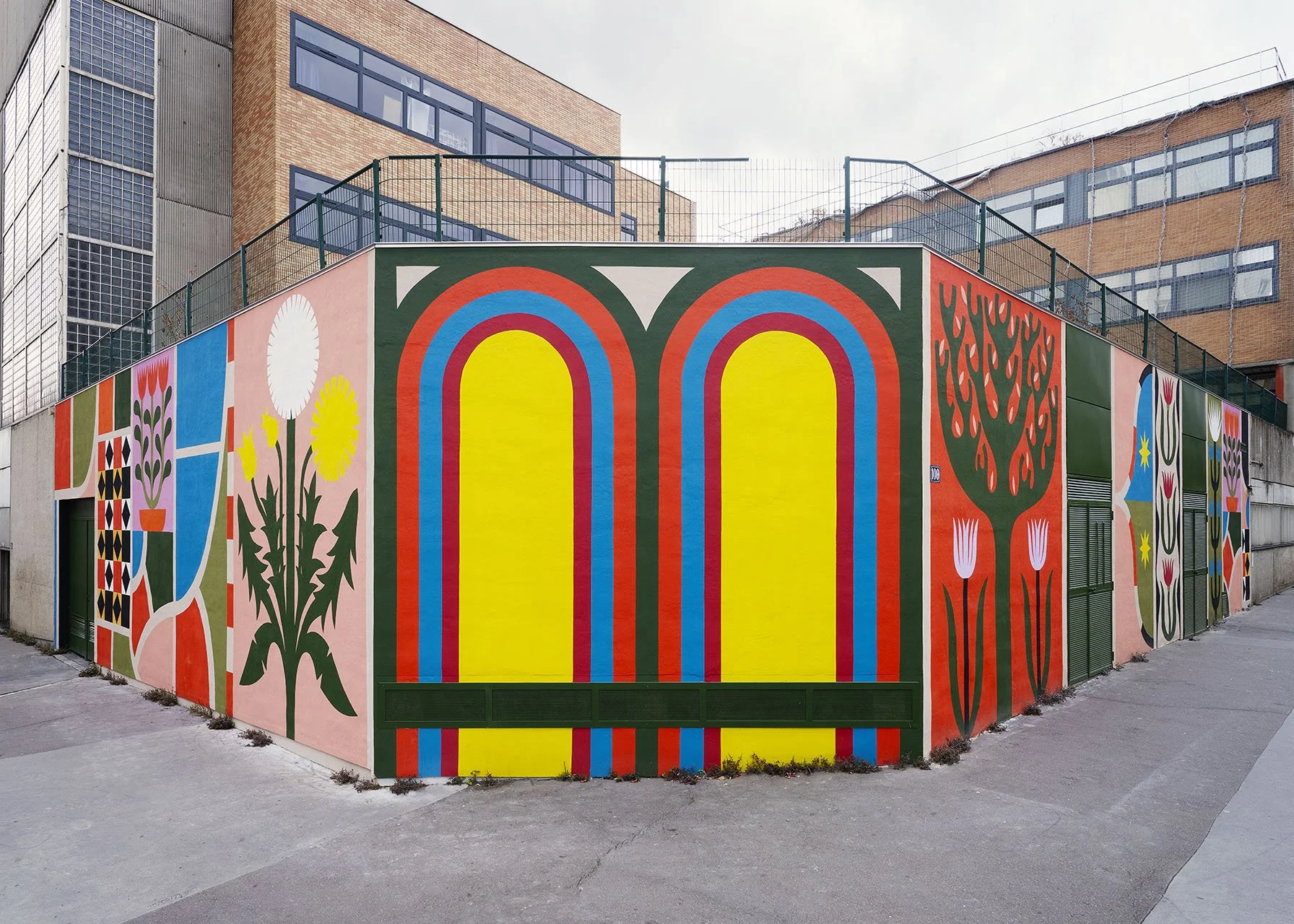
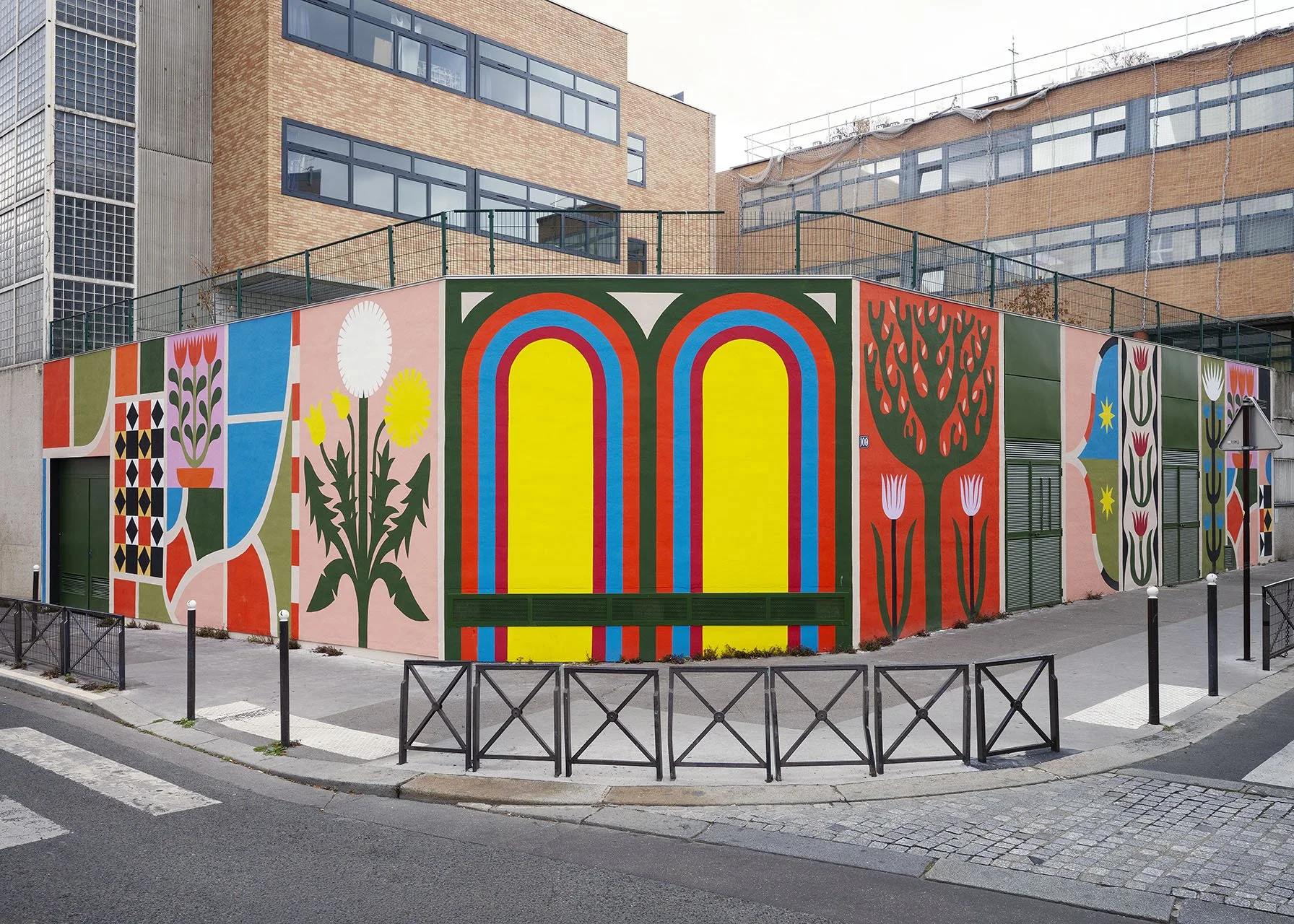
Imaginary Cartography transforms the urban wall into an abstract map of Ménilmontant, reinterpreting the neighbourhood’s identity and heritage through a vivid, dense language of shapes, colours, and ornamental signs.
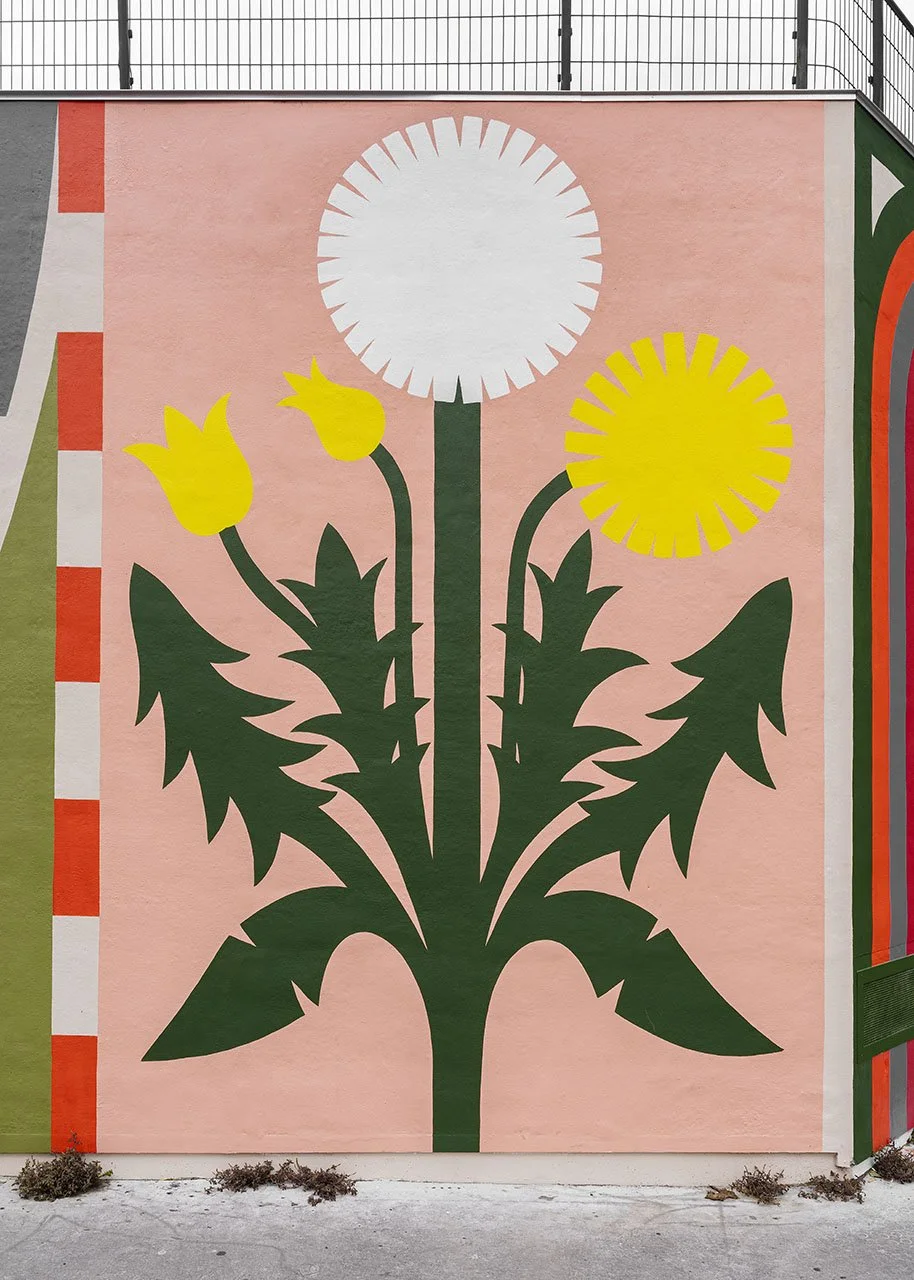
Developed in close dialogue with drawings created by around 200 local students from the Amandiers and Robert Doisneau schools, the mural brings together real and imagined fragments of the territory. Architectural elements, urban pathways, wildflowers, and the neighbourhood’s symbolic almond trees coexist and intertwine without ever resorting to literal representation.
Rather than suggesting spatial orientation, the title evokes a map designed for perception: a poetic and playful representation of a place, built through abstraction, shared vision, and collective memory.ut’s tale, a drug brings ageing to an end, forcing several generations to share the same apartment. Permanence becomes a question of space—a tension that runs throughout the exhibition.
The show brings together twenty-one untitled paintings centred on still life and the domestic interior. Familiar objects—vases, fruit, flowers, chairs and tables—are transformed through shifts in scale, colour and perspective. Landscape gives way to the room, while everyday objects acquire an ambiguous, almost monumental presence.
Colour remains central to Iacurci’s practice. Dense, matte surfaces combine references ranging from Roman ornament and mythology to Futurism, postmodern design and contemporary visual culture. Painting, sculpture, installation and architecture are treated as elements of a shared visual language.
A site-specific wall painting extends the works throughout the gallery. Fields of pink, green, orange and yellow divide the rooms into wings and perspectival spaces, creating a single environment in which paintings, objects and architecture overlap. The wall is no longer simply a support for the image, but becomes part of it.